 Emi Sato
I still remember my first attempt at making dashi. I boiled the kombu for ten minutes, tossed in the katsuobushi, and ended up with a cloudy, bitter liquid that tasted like the ocean floor. Not good. But after years of tweaking, burning, and occasionally nailing it, I’ve learned that great dashi isn’t about complicated steps—it’s about restraint and timing. If you want to know how to make dashi that actually tastes clean and deep, you’re in the right place.
What’s Inside
What Is Dashi, Really?
Dashi is Japanese stock. It’s the backbone of miso soup, noodle broths, simmered dishes, and even some salad dressings. The most common type is awase dashi, a combination of kombu (dried kelp) and katsuobushi (dried bonito flakes). But there’s also shiitake dashi, niboshi dashi (sardine), and kombu-only dashi for vegans.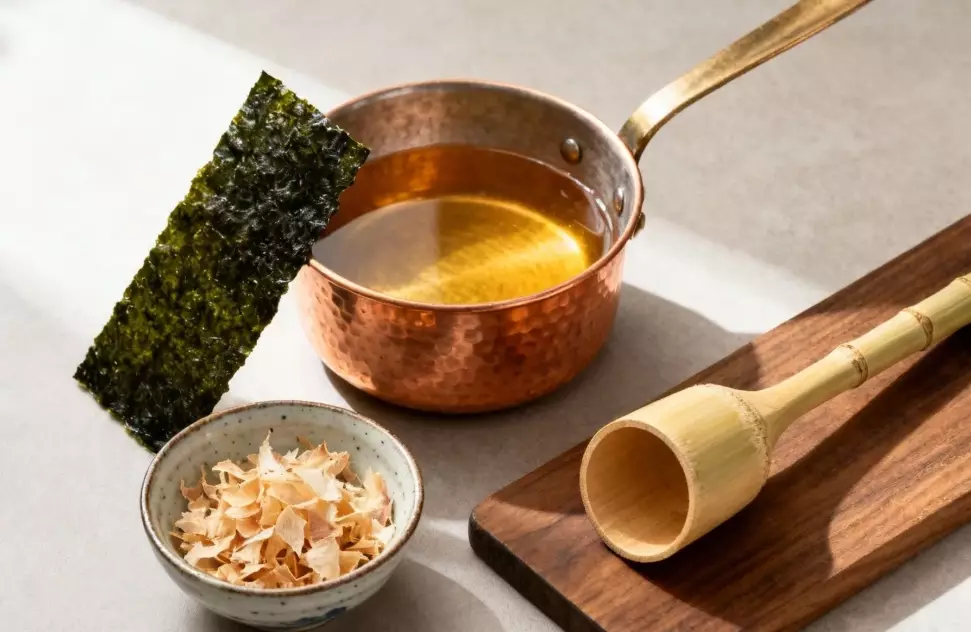
What makes dashi special is glutamic acid from kombu and inosinic acid from bonito. When these two combine, you get a synergistic umami burst that’s roughly eight times stronger than either alone. That’s the science. The art is extracting those compounds without pulling out bitterness or fishiness.
Non-consensus tip: Most recipes tell you to soak kombu for at least 30 minutes. I’ve found that a 20-minute soak in room-temperature water gives you 90% of the flavor without the slimy texture that longer soaks can create. If you’re short on time, skip the soak entirely and heat gently from cold—just don’t let it boil.
Two Reliable Methods for Making Dashi
You’ll see dozens of variations online, but for home cooks, two methods cover almost everything: the cold-brew method for delicate dishes and the quick-heat method for everyday cooking. I use both depending on what I’m making.
Kombu Dashi: The Vegan Foundation
This is your go-to for miso soup, vegetable dishes, and anything that needs a subtle lift. Here’s how I do it:
- 10 grams (about one 4x4 inch piece) of dried kombu per 1 liter of cold water. Wipe the kombu with a damp cloth—don’t rinse it, you’ll lose flavor.
- Place kombu in a pot with cold water. Let it sit for 20 minutes. You’ll see tiny bubbles forming on the surface.
- Turn on medium heat. Just before it boils (around 80°C / 175°F), remove the kombu. If you let it boil, the dashi turns bitter and slimy.
- That’s it. You have kombu dashi. Use it immediately or store it.
If you want a stronger kick, add 2-3 dried shiitake mushrooms along with the kombu. The soaking water becomes part of the stock.
Awase Dashi (Kombu + Bonito): The Classic
This is the dashi you taste in most restaurants. It’s richer and more complex. You’ll need the kombu dashi from above plus katsuobushi.
- Make kombu dashi as described, but keep the heat at a gentle simmer after removing the kombu.
- Add 15-20 grams of katsuobushi (a generous handful) to the hot (not boiling) dashi. Turn off the heat immediately.
- Let it steep for 3-5 minutes. The flakes will sink. Don’t stir—that releases bitterness.
- Strain through a fine-mesh sieve lined with a paper towel or cheesecloth. Don’t press the flakes; let gravity do the work.
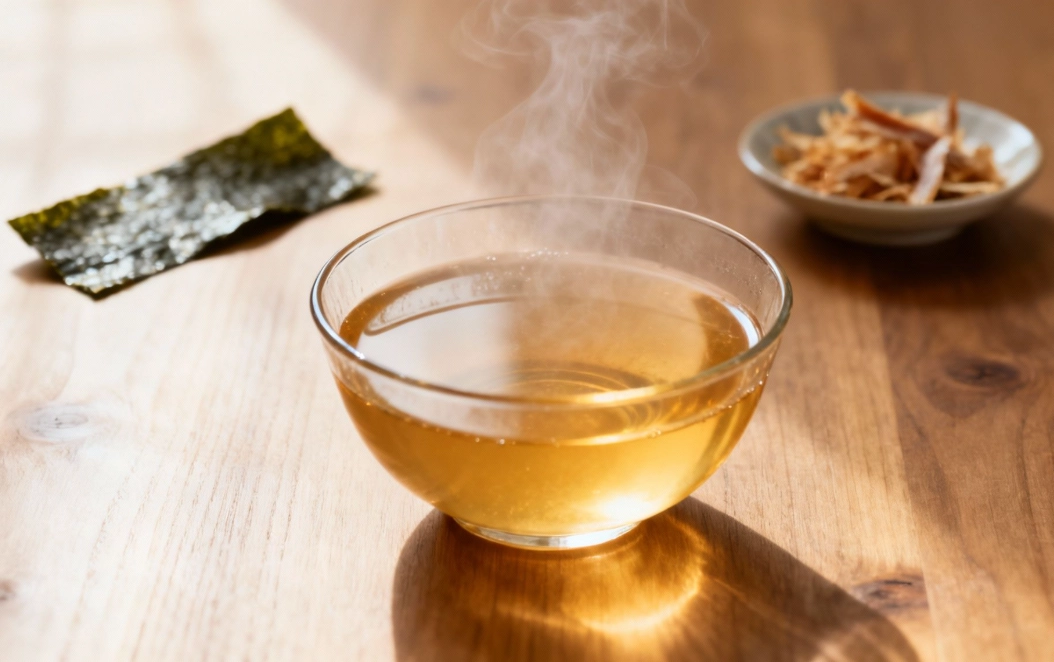
The result is a golden, clear liquid with a deep savory aroma. I’ve found that using a slightly lower temperature (around 70°C) for the bonito steep gives a cleaner taste, especially if you’re using high-quality katsuobushi.
| Method | Time Needed | Best For | Flavor Profile |
|---|---|---|---|
| Kombu Dashi | 25 minutes | Vegan dishes, light soups, simmered vegetables | Clean, slightly sweet, ocean-forward |
| Awase Dashi | 30 minutes | Miso soup, noodle broths, dipping sauces | Rich, smoky, deep umami |
| Shiitake Dashi | 4+ hours (cold brew) | Vegetarian stews, rice dishes | Earthy, woody, mild |
The Mistakes That Ruin Dashi (And How to Fix Them)
I’ve made all of these. Hopefully you won’t have to.
Boiling kombu. This is the big one. Boiling releases alginate, a slimy substance that makes your dashi cloudy and bitter. Fix: remove kombu at 80°C. Use a thermometer if you’re unsure—I keep a cheap instant-read one in my kitchen just for this.
Squeezing the bonito flakes. It’s tempting to press down to get more liquid, but you’ll extract fishy, bitter compounds. Just let them drain naturally. You’ll lose maybe 10% of the liquid but gain a much cleaner taste.
Using old katsuobushi. Bonito flakes lose their umami quickly once opened. Store them in the freezer in an airtight bag. If they smell like stale fish, toss them. I learned this the hard way after a batch of dashi that tasted like cardboard.
Over-soaking shiitake. For shiitake dashi, soaking longer than 6 hours can introduce a slightly sour note. I usually soak overnight in the fridge (about 8 hours) and it’s fine, but if your kitchen is warm, stick to 4 hours.
My personal fix: If your dashi tastes flat, add a tiny piece of kombu (about 1 inch) to the finished stock and let it sit for 10 minutes off the heat. It won’t get slimy, but it’ll boost the umami. I do this when I’m using store-bought katsuobushi that’s a bit old.
How to Store Dashi Without Losing Flavor
Fresh dashi is best used within a day. But let’s be real—who makes dashi every single day? I make a big batch and freeze it.
Pour cooled dashi into ice cube trays. Once frozen, transfer cubes to a freezer bag. They keep for about a month. Each cube is roughly 2 tablespoons, which is perfect for single servings of miso soup.
If you refrigerate dashi, use it within 3 days. Reheat gently—never boil—because boiling kills the delicate aroma. I’ve also noticed that dashi tastes slightly saltier after a day in the fridge, so adjust your seasoning accordingly.
Common Questions I Hear All the Time
That’s really all there is to it. Dashi is one of those things that seems intimidating until you do it once. The key is to treat the ingredients gently—no boiling, no squeezing, no rushing. Once you’ve made your own, you’ll notice the difference in everything from miso soup to noodle broth. It’s a small effort that pays off in a big way.
This article was fact-checked against traditional Japanese cooking references and my own kitchen trials.

Reader Comments