 Emi Sato
What's in this guide
I've made Japanese potato salad maybe forty times in the last five years. Not because I'm some kind of purist, but because my mother-in-law in Osaka keeps sending me back home with a container of hers, and I got tired of mine tasting like a sad pile of mashed potatoes with mayo.
Here's the thing about Japanese potato salad — it's not just American potato salad with a different label. The texture is completely different. It's creamy but not gluey. Sweet but tangy. And the vegetables inside are cut so thin they practically disappear. That's the part most recipes online get wrong.
Let me walk you through what I've learned, including the exact steps that finally made my version taste like the ones I get in Tokyo delis.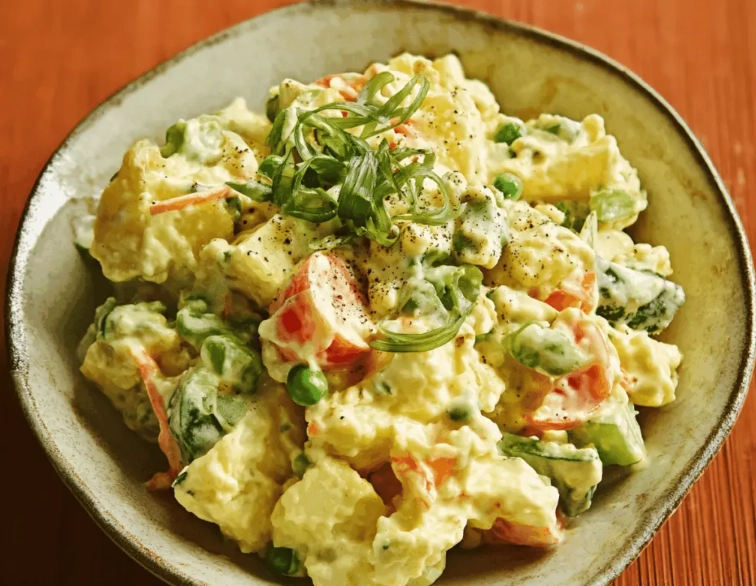
What Makes Japanese Potato Salad Different?
The biggest difference is the potato itself. Japanese recipes use danshaku potatoes — a starchy, fluffy variety that mashes smoothly but still holds a little body. You won't find danshaku easily outside Japan, so I use Yukon Gold. It's not identical, but it's close enough. Russets turn too watery. Red potatoes stay too waxy.
Then there's the vinegar. Rice vinegar, not white vinegar. That gentle acidity is what gives the salad its bright finish without making you pucker. And Kewpie mayonnaise — the Japanese brand with egg yolks instead of whole eggs — adds a richness that regular mayo can't match. It's slightly sweeter, too, which is why the salad tastes almost dessert-like.
But the real secret? The way you cut the vegetables. Japanese potato salad has julienned carrots, thinly sliced cucumbers, and sometimes slivers of onion. They're not chunky. They're almost paper-thin. That's what makes the texture feel refined, not rustic.
Ingredients That Actually Matter (And What to Skip)
You don't need a long list. But every ingredient needs to pull its weight. Here's what I use and why.
| Ingredient | Why it matters | What I use |
|---|---|---|
| Potatoes | Starchy but not gluey | Yukon Gold (or danshaku if you can find them) |
| Kewpie mayonnaise | Eggier, sweeter, richer than American mayo | Kewpie (the squeeze bottle is easier to control) |
| Rice vinegar | Gentle tang, no harsh bite | Mizkan or Marukan |
| Carrot | Color and a subtle sweetness | One small carrot, julienned |
| Cucumber | Crunch and freshness | Japanese cucumber or English cucumber, thinly sliced |
| Onion | A little sharpness to cut the richness | Sweet onion, sliced paper-thin |
| Salt and sugar | Balances everything | Fine sea salt and granulated sugar |
Skip the celery. Skip the mustard. Skip the pickles. Those are American additions. They'll taste fine, but they won't taste Japanese.
One thing I wish someone had told me earlier: don't use a food processor for the potatoes. I did once, and the salad turned into a gummy paste. A simple fork or potato masher is enough. You want some lumps.
Step-by-Step Recipe (With the Texture Trick Most Recipes Miss)
This serves four to six as a side dish. Takes about 40 minutes, including cooling time.
Step 1: Cook the potatoes properly
Peel three pounds of Yukon Gold potatoes. Cut them into quarters, put them in a pot, and cover with cold water. Add a generous pinch of salt. Bring to a boil, then turn down to a simmer. Cook until a fork slides in easily — about 15 minutes. Drain them, then return the potatoes to the hot pot for a minute to evaporate excess water. This step keeps the salad from getting watery later.
Step 2: Mash while hot, season while hot
Mash the potatoes with a fork or masher while they're still hot. Add two tablespoons of rice vinegar and a teaspoon of sugar. The heat helps the potatoes absorb the vinegar so the flavor runs through every bite. Let them cool for about ten minutes.
Step 3: Prep the vegetables the right way
While the potatoes cool, slice one small carrot into matchsticks (about 1.5 inches long). Slice half a Japanese cucumber thinly, sprinkle with salt, let sit for five minutes, then squeeze out the water. Do the same with a quarter of a sweet onion, sliced paper-thin. This step removes the raw bite and keeps the salad from getting soggy.
Step 4: Fold everything together
Add the vegetables to the cooled potatoes. Then add ½ cup of Kewpie mayonnaise. Fold gently with a spatula — don't stir aggressively. You want the vegetables distributed, not crushed. Taste it. Add salt if needed. A pinch of black pepper is fine, but don't overdo it.
Step 5: Chill before serving
Let the salad sit in the fridge for at least 30 minutes. The flavors need time to mingle. I know it's tempting to eat it right away. Wait. The vinegar and mayo need to settle into the potatoes.
Common Mistakes and How to Fix Them
I've made all of these. Here's how to avoid them.
- Over-mashing the potatoes. If your salad looks like baby food, you went too far. Leave some small chunks. That's the texture that makes it feel homemade.
- Adding hot potatoes to mayo. The mayo will split and turn oily. Always cool the potatoes to room temperature or cooler before mixing.
- Not draining the cucumber and onion. Excess water dilutes the dressing. Salt them, squeeze them, and pat them dry with a paper towel.
- Using regular American mayo. It's too tangy and not sweet enough. Kewpie is worth the extra dollar. If you absolutely can't find it, mix regular mayo with a teaspoon of sugar and a dash of rice vinegar.
One more thing: don't add the carrots and cucumber too early. If you're making this ahead of time, fold them in just before serving. Otherwise they lose their crunch.
How to Serve and Store It Without Ruining the Creaminess
Japanese potato salad is usually served cold, as a side dish. It's a staple in bento boxes, and it goes well with grilled fish, tonkatsu, or just a simple green salad. I like it on toast the next morning, but that's a personal thing.
For storage, keep it in an airtight container in the fridge. It'll last three days. After that, the cucumbers start to get soft and the mayo loses its edge. Don't freeze it — the potatoes turn grainy and the mayo separates. That's a mistake you only make once.
If you're bringing it to a potluck, put the container in a cooler with an ice pack. Mayo doesn't like warm weather. I learned that the hard way at a summer picnic.
Quick Answers to Real Kitchen Problems
The first time I made this, I thought I could just throw everything in a bowl and call it done. It tasted fine. But the second time, I followed the steps above, and it tasted like the potato salad I remembered from a tiny deli in Tokyo's Kichijoji neighborhood. The difference was the vinegar in the hot potatoes and the thin-sliced vegetables. Small things. But they matter.
I've checked the details in this recipe against Japanese cooking sources and my own repeated tests in a home kitchen. The ingredient ratios are based on trial and error, not a single source. If you try it and something doesn't work, tell me. I'm still learning too.
Reader Comments